Posted on November 22, 2007 in Snails & Slugs by James - Rid Pest ControlNo Comments »

There must be lots of family anecdotes and jokes associated with true life incidents of kids having eaten, or at least tried to eat snails and slugs.

While not the most appetizing meal, most don’t realize that these slimy creatures have the potential to serious illness and even death.

Some garden snails and slugs carry the larvae of a parasitic worm Angiostrongylus cantonensis.

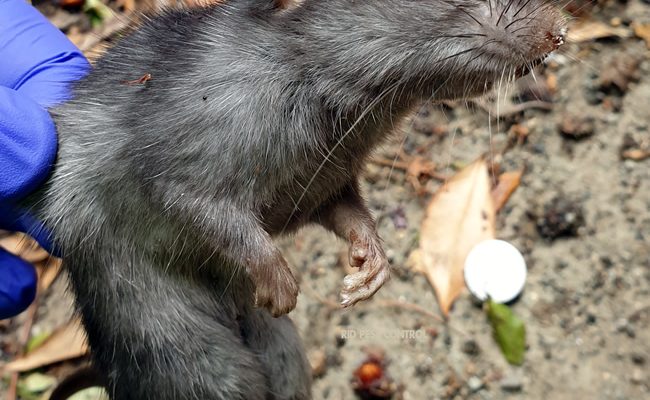
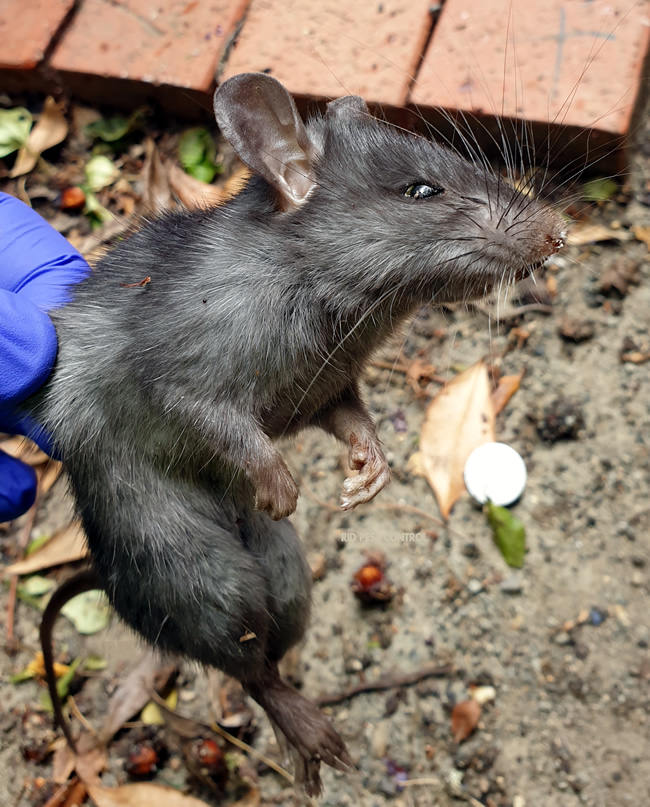
The worm is more commonly found in the lungs of rats. The host rats pass eggs and larvae through their droppings and slugs and snails are attracted to the droppings.

Eating raw or undercooked snails or slugs can then cause the larvae to be ingested. Even unwashed vegetables that snails have crawled over can be a potential danger.

The worm invades the intestinal wall and colonizes the brain, the spinal chord and lungs; potentially causing a deadly form of meningitis (eosinophilic).

A two-year-old Brisbane child died in 1971 after eating garden snails, as well as a person whom it was suspected had eaten lettuce contaminated with slug or snail slime.

Initially it was not believed that the parasite existed as far south as Sydney, however in 2001 a Sydney student who ate two slugs for a $20.00 dare contracted the deadly meningitis. Fortunately he recovered after 17 days of hospitalization and five months of rehabilitation. His mate also swallowed slugs but immediately vomited them up. He lost the bet, but saved himself from an extremely serious illness. Luck sometimes comes in strange packages!!!

Find out more from the professionals at Rid Pest Control Services

Technorati Tags: , , ,

Posted on November 22, 2007 in Quick Information by James - Rid Pest ControlNo Comments »

Bees swarm from mid spring, through summer. Usually swarming takes places because the colony (hive) has grown too large, and some bees will divide off and leave to find another site to establish a new colony. There will be a queen and a good few hundred (at least) workers. It may be the old queen, if the hive has decided she is not producing brood as well as expected, or if the existing queen is still vigorous, the queen may be new.

Often the air will turn dark with swarming bees. They will seek temporary respite, often clustered in the branches of a back yard shrub. Although they are usually “intoxicated” with nectar and not interested in attacking or stinging, it is best to leave them well alone, and call a beekeeper.

During the time they are clustered outside, scouts will be looking for a more permanent home. In the wild, this will often be in the hollow of a tall tree. However, with much clearing of native forests for housing and other development, it can sometimes be difficult to find suitable tree hollows, and a decision may be made to establish the colony inside cavity walls of houses.

(more…)

Posted on November 21, 2007 in Articles by James - Rid Pest ControlNo Comments »

Order Diptera

The Queensland Fruit Fly Bactrocera tryoni is wasp-like in appearance and about 7 mm in length. It is reddish brown in colour with distinct yellow oval markings.

Many people confuse fruit flies with Vinegar Flies ( Drosophila melanogaster);

those flies that hover around the fruit bowl indoors.

The Vinegar Fly is not actually a fruit fly as it does not feed on fruit directly, just the yeasts associated with rotting fruit.Fruit Fly

The female fruit fly only lays eggs in maturing and ripe fruit. The larvae burrow inside the fruit and destroy it during the process of development. Fallen fruit will more often than not contain fruit fly larvae. When fully developed as larvae, they will burrow into the ground and emerge as adult fruit flies. The full life cycle from egg to adult can occur in as little as six weeks. There can be five or more generations of fruit fly in a single growing season.

(more…)

Posted on November 18, 2007 in General Pests, Articles by James - Rid Pest ControlNo Comments »

Order Acarina,

The Paralysis tick Ixodes holocyclus, is by far the most dangerous tick where domestic pets and humans are concerned.

This tick can cause paralysis in a variety of forms but usually symptoms begin with weakness of the hindquarters that progresses to total paralysis of all four legs. Other typical early signs include an altered bark or meow and vomiting. By the time the chest muscles and muscles of the throat have become affected, the dog or cat will be in very serious trouble.tick1

The Paralysis tick is known generally, to be only found along the eastern coast of Australia, with evidence that they are now in parts of Western Australia. It can also be found inland if suitable habitats are on offer.

Ticks need humidity and mild weather to develop and will not survive and breed in cold climates. In northern parts of Australia, paralysis ticks may be found all year round, while in southern areas the season goes from spring through to autumn.

(more…)

Posted on November 17, 2007 in Articles, Pest Control by James - Rid Pest Control2 Comments »

Control of true feral cats should not be the emotive subject that it has become.

The feral cat is found in most habitats across Australia, including the snow fall and desert regions. It is responsible for the extinction of some species on islands and is believed to have contributed to the disappearance of many ground-dwelling birds and mammals on the mainland.

It is estimated that there could be at least 400,000 true feral cats in New South Wales Feral Catsand 12 million Australia wide. (NSWNPWS)

Feral cats should not be confused with nuisance cats. Feral cat control is not easy, as the cats are very wary of humans. Trapping is probably the most successful method, although trap shyness is reasonably common. Although other methods of control are used, trapping is the only method we recommend or condone on this site.

Do It Yourself Pest Control - Herbal Sprays

For non-feral cats causing a nuisance on your property, pet stores and vets have a range of cat deterrent sprays. There has been some success with herbal sprays made from chilli, garlic and water or the direct application of pepper to frequented areas.

The downside is that all sprays must be reapplied on a regular basis or after the area has had contact with water.

(more…)

Posted on November 17, 2007 in Natural Pest Control by James - Rid Pest ControlNo Comments »

Orange oil (d-limonene) has become a very successful “NATURAL” means of controlling a wide range of insect pests in USA

Unfortunately there are no commercial products currently available in Australia that have been registered for use as an insecticide.

There are a number of Orange-Oil based cleaners that might work, although care should be taken with regard to the strength of the product, as some have the ability to melt plastic and strip paint.

A home made Citrus Oil mix can be made by mixing citrus peel of any type in a blender and covering with cold water. Left to soak for a couple of days, the strained mix can be sprayed on a wide variety of insect pests such a cockroaches and ants.

Not as strong as the real thing, and expectations should not be for total eradication, but success to some degree should be achieved.

JD

Posted on November 17, 2007 in DIY Pest Control by James - Rid Pest Control9 Comments »

Slaters

Order Isopoda

Slater, Slater Bug

Slaters, also known as Sowbugs, Wood Lice and Pillbugs are in fact, not insects, but crustaceans, more closely related to prawns crabs and lobsters .

They are one of only two species of crustaceans that have adapted to living solely on land, although they still need to live in a fairly moist exterior environment

Although they will, from time to time enter buildings, their presence is purely nuisance value, as they do not bite, sting, or known to transmit diseases, nor do they infest food, clothing or wood.

Slaters range in size from 6mm to 12mm long and are usually dark to slate grey. They have oval, multi-segmented bodies, are convex above but flat or concave underneath. They possess seven pairs of legs and two pairs of antennae although only one pair of antennae is readily visible. Slaters have two tail-like appendages which project out from the rear end of the body.

(more…)

Posted on November 12, 2007 in DIY Pest Control, Natural Pest Control by James - Rid Pest Control3 Comments »

The most common of this group of pests is the Bronze Orange Bug; Musgraveia sulciventris.

The young (nymphs are usually green in colour and easily camoflage among the leaves of the host tree. They gradually darken to orange or orange/black, often attaining 25mm in length.

Essentially pests of citrus trees, they feed upon the young shoots flowers and fruit

When disturbed the bugs will position themselves in order to squirt an vile smelling chemical in the direction of their attacker. The chemical not only has a shocking smell, it also stains skin and clothing and can cause a burning sensation if squirted or rubbed into the eyes.Stink Bug Photograph

Do It Yourself Pest Control

Treat the underside of leaves with a soap spray during winter. Eggs and nymphs are present at this time and if winter control is achieved, the population of adults will be well down to eliminated when they are at their worst during mid-summer and autumn. The eggs are little white spheres, laid on the underside of leaves for protection and are always found in groups of 4 lines.

If summer has arrived and you already have a problem, the following remedies are useful:
  • Manual removal if there aren’t too many. Use gloves and a pair of goggles, knock them off into a bucket of boiling water.
  • Vinegar spray may be useful in controlling both caterpillars and sap-sucking insects such as stink bugs, aphids, and mealybugs.
  • Only those with a spare, old vacuum would dare try it. Vacuum them off the leaves and, at least throw away the dust bag (if not the vacuum cleaner),

Vinegar spray recipe

Mix 1 part vinegar with 3 parts water and add 5 g of pure soap flakes.


Take a look at Rid Pest Control’s Website for more information.
Posted on November 11, 2007 in General Pests, Articles, Pest Control by James - Rid Pest Control1 Comment »

Order Dermaptera

There are about 1800 different recorded species of Earwig throughout the world, and over 60 species in Australia.

They have short leathery wings, although weak flyers and the abdomen extends well past the wings, usually (but not always) ending with pincer type cerci.

Most are dark brown in colour and around 12 –14mm in length

There is no evidence that they harmful to humans or animals despite also being known as “pincer bugs”

Earwig

Earwigs prefer to live in moist cool situations, although they are somewhat adventurous and will wander.

Not really considered pest, and in some circles are thought of as beneficial as they feed on other insect, however they are known to eat and damage the soft tissue of developing plants, as well as ripe fruit and garbage.

Do It Yourself Pest Control - Earwigs

  1. Loosely rolled up newspaper located in the area they frequent will attract them into the loose folds. Manner of disposal is up to the catcher, although into a bucket of soapy water seems popular.
  2. Earwigs are attracted to fish oil and vegetable oil. A small foil pie-dish half filled with oil sunk into the soil up to the rim will trap them successfully.
  3. Similar to above using soapy water has also been used with some success.
  4. Elimination of rotting vegetation will also remove their favoured habitat

Posted on November 6, 2007 in Snails & Slugs, Quick Information, Quick Tips by James - Rid Pest Control2 Comments »

Snails & Slug Repellentssnail

I guess snails and slugs have some purpose in the grand scheme of things, but when they start destroying vegetable crops, ornamentals and leaving silvery trails, it becomes difficult to see just what good they may serve.

There are a few natural cures that have some success, although I once knew an organic vegetable grower who used to rise early and collect snails from his crops using a torch and a bucket, declaring this was still the most effective method of control.

Chalk

If protecting a small area, surround the area with a circle of powdered chalk. It has been suggested that snails and slugs will not cross the chalk.

Fizzy Drink

The owner of this suggestion insists that the brew must be Coca Cola. Coke poured into jar lids and dispersed around the garden will, because of it’s sugary content attract these molluscs. It seems the acids in the soft drink will destroy them when they slither onto the

lids (It does this to snails and we drink this stuff?)

(more…)